A weaker gold market puts the focus on transaction economics, foreign-exchange allocation and the cost of protecting Ghana's public balance sheet.

Gold's correction is testing more than the value of Ghana's exports. It is testing the relationship between gold trading, dollar liquidity and reserve accumulation.
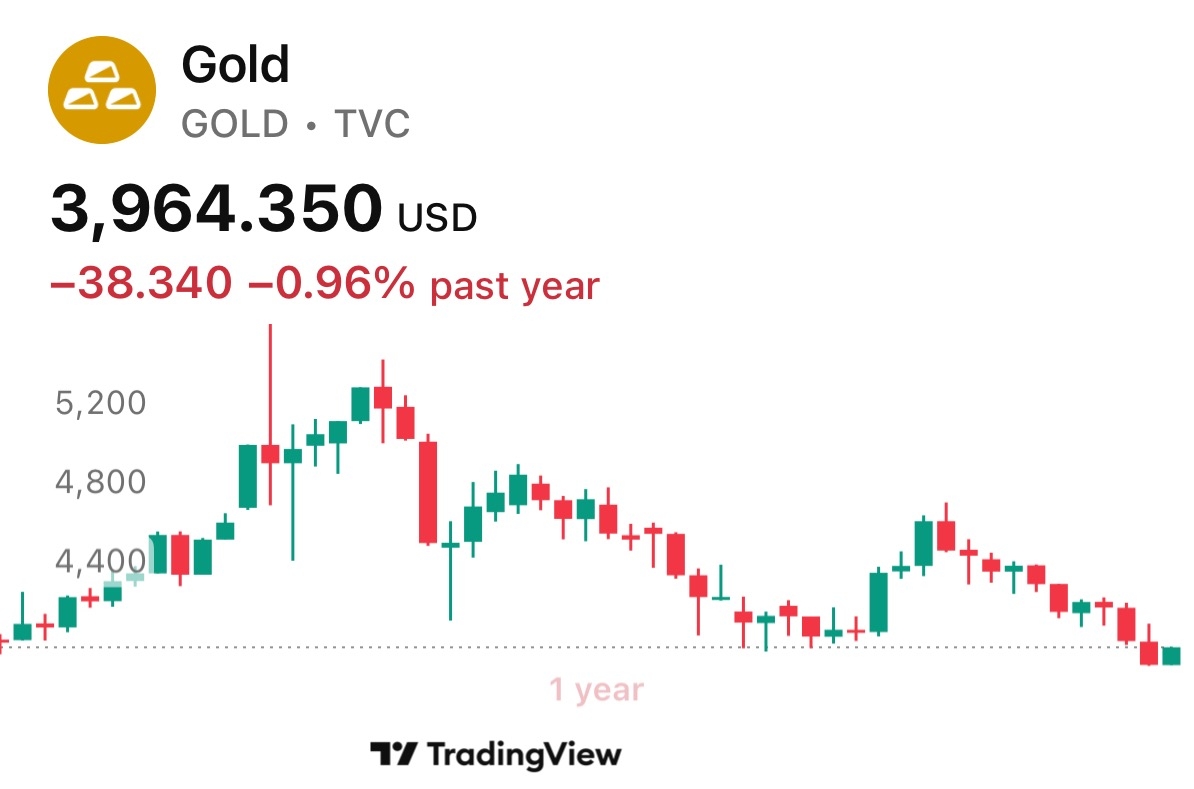
The World Gold Council reported that gold ended September at $4,176 per ounce, down 8.5% for the month. That historical observation is not a forecast. It demonstrates why a national strategy built around gold receipts must remain workable when prices decline.
Ghana cannot control the international gold price. It can control how it measures exposures, allocates liquidity and evaluates protection.
Read the October Numbers Carefully
On November 2, GoldBod reported $1.011 billion in foreign exchange from its October artisanal and small-scale mining gold operations. All of it was sold to authorized commercial banks.
That was $489 million below the previously announced $1.5 billion total target. However, the original allocation envisaged $1 billion for commercial banks and up to $500 million for the Bank of Ghana. Commercial-bank sales therefore slightly exceeded their planned allocation even though total receipts fell short.
In September, GoldBod had reported $1.871 billion in FX generation, including $1.170 billion provided to the Bank of Ghana.
These figures do not establish that falling gold prices caused the October shortfall. Volumes, pricing arrangements, shipment schedules and settlement timing must also be examined. Nor do they establish that Ghana's total reserves declined.
They do show why aggregate FX generation is not enough to assess performance.
The relevant questions are how much foreign exchange was generated, at what cost, when it became available and where it was allocated.
Three Exposures, Not One
GoldBod's commercial exposure begins with the purchase and ends only when sale proceeds are settled. Procurement premiums, assay and refining costs, financing, logistics and currency conversion all affect the result.
Matching purchases and sales can reduce outright price exposure. It does not automatically eliminate differences in purity, pricing benchmarks, delivery dates or counterparty performance.
The Bank of Ghana faces a different problem. Gold-related receipts can support both domestic FX liquidity and reserve accumulation, but those uses draw on a finite flow. Lower receipts can make the allocation decision harder.
The Ministry of Finance must assess the wider public-sector consequences. Weaker gold earnings can affect tax receipts and external liquidity. Higher oil prices can simultaneously increase import costs.
These exposures interact, but they should not be combined into an undefined national trading position. Private gold-export proceeds are not automatically government revenue.
Protection Must Follow the Exposure
A hedge established after a price decline cannot recover a previously available selling price. It may still protect a defined future exposure.
For GoldBod, the starting point should be procurement-to-sale matching and daily reconciliation of inventory, purchase commitments, sales contracts, funding and settlement obligations.
Residual price exposure may justify evaluating forwards, futures or options. Each has different costs and cash-flow implications. A hedge that reduces economic risk may still require cash before the physical transaction settles.
For the government, protection should relate to identifiable public revenue, not the country's entire gold-export volume. Put options can preserve upside while providing a price floor, but premiums may be substantial. A collar can reduce the upfront premium by giving up some upside.
Price protection also does not guarantee production or collection. If the underlying revenue fails to materialize, a poorly matched hedge can create a new exposure.
The objective is a defined level of resilience, not a prediction of the next move in gold.
Any proposal requires analysis of legal authority, liquidity, counterparties, accounting and execution costs before approval.
Measure Net Value, Not Just Dollar Receipts

The IMF's study of the Bank of Ghana's Domestic Gold Purchase Programme reported approximately $1.7 billion in losses in 2025. It identified a need to reduce operating costs and improve transparency as operations transferred to GoldBod.
Those historical Bank of Ghana program losses should not be presented as GoldBod's current trading losses or as losses caused by the recent price correction.
The analytical lesson is narrower and important: substantial FX generation can coexist with substantial costs.
Performance reporting should distinguish gross receipts, realized margins, unrealized valuation changes and funding costs. It should also explain the allocation of receipts between banks and reserves.
Stress-Test the Public Balance Sheet
A coordinated framework should examine lower gold prices alongside shipment delays, weaker collections, elevated energy-import costs and adverse currency movements.
Illustrative gold-price scenarios of $3,800, $3,600 and $3,400 per ounce could be used to test sensitivity. These are stress assumptions, not forecasts, and should be calibrated to current exposures.
GoldBod should quantify transaction-level cash needs. The Bank of Ghana should assess liquid foreign-currency buffers and reserve adequacy. The Ministry of Finance should evaluate fiscal effects and public-sector contingent obligations.
A decline in the market value of monetary gold is not the same as a realized cash loss. Reserve planning should avoid confusing valuation changes with immediately available spending capacity.
The practical question is how much external liquidity remains available when gold receipts weaken and other demands on foreign exchange rise.
The Test Is Institutional
Gold may recover. Public financial policy should not depend on that outcome.
Ghana needs common stress assumptions, clear institutional responsibilities and an agreed approach to measuring the net cost of generating foreign exchange.
The strength of a gold strategy is not demonstrated only by the dollars it generates in a strong market. It is demonstrated by the financial flexibility it preserves in a weaker one.